FreeCell – how to play
FreeCell is a solitaire of thinking, not luck. All 52 cards are face up from the start, and four free cells let you put cards aside for a while. Almost every deal can be won if you plan well.
How to play, step by step
Step 1
The cards on the table
You play with one deck of 52 cards, all face up in 8 columns. At the top left are 4 free cells, at the top right 4 places for the foundations. There is no stock: every card is on the table.
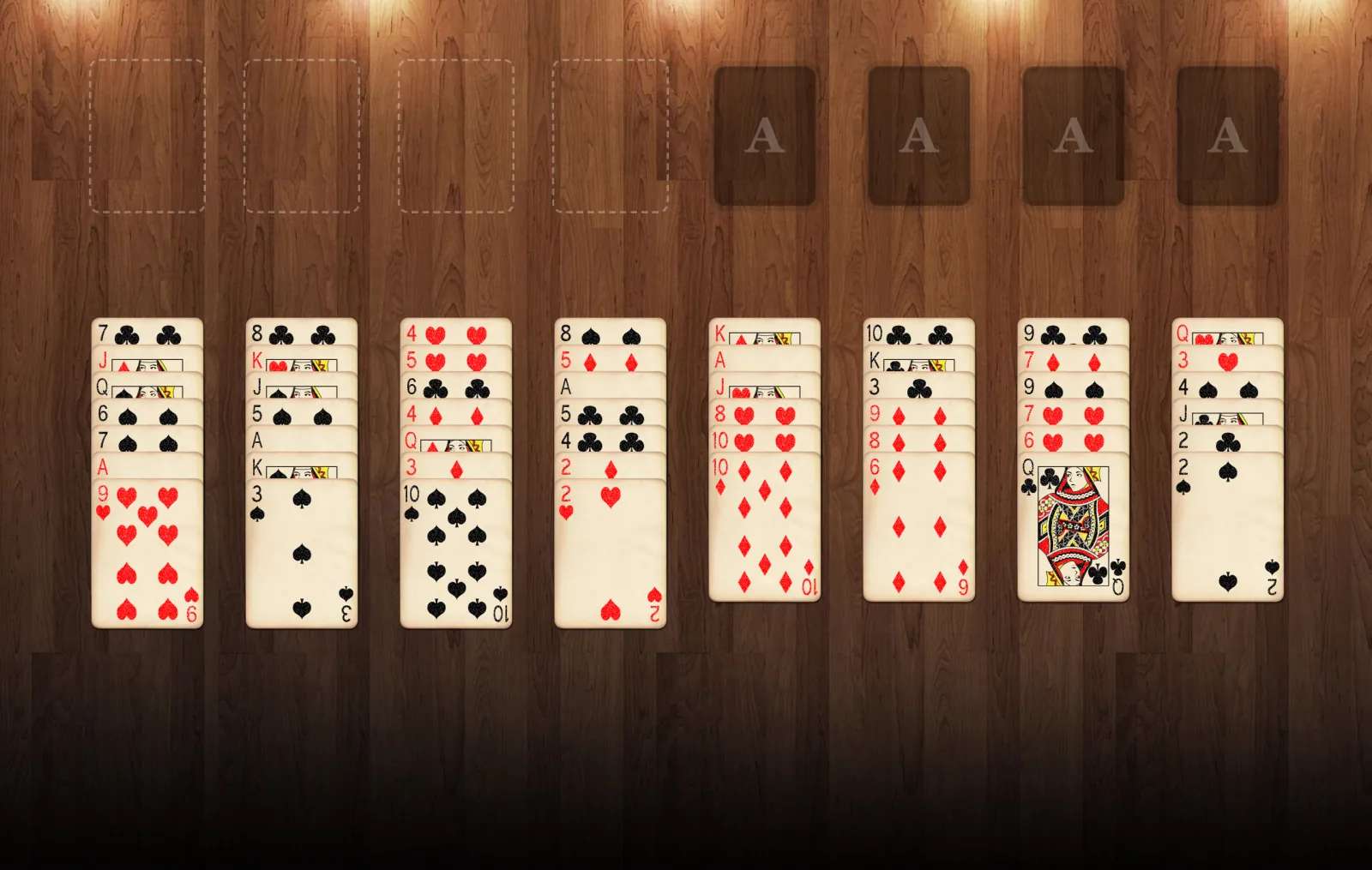 4 free cells
4 foundations
8 columns, face up
- 1 4 free cells
- 2 4 foundations
- 3 8 columns, face up
Step 2
Build down in alternating colours
Put a card on a card one rank higher of the other colour. For example, the 9 of hearts goes on the 10 of spades, but not on the 10 of diamonds.
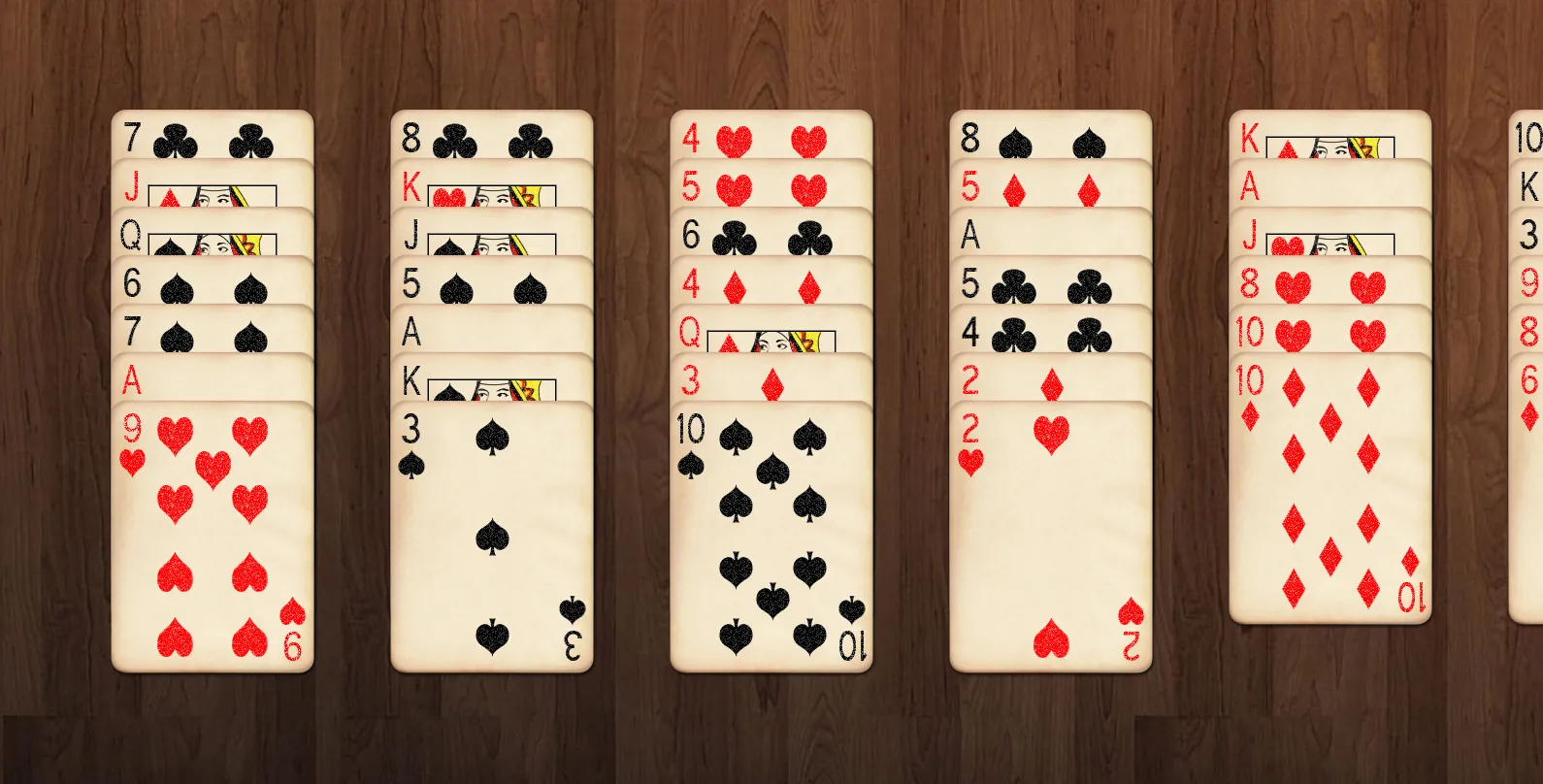 Red 9 on black 10
Not red on red
- 1 Red 9 on black 10
- 2 Not red on red
Step 3
Put a card aside in a free cell
Any card from the top of a column can go into an empty free cell. Each cell holds one card. Later you play the card from the cell onto a column or a foundation.
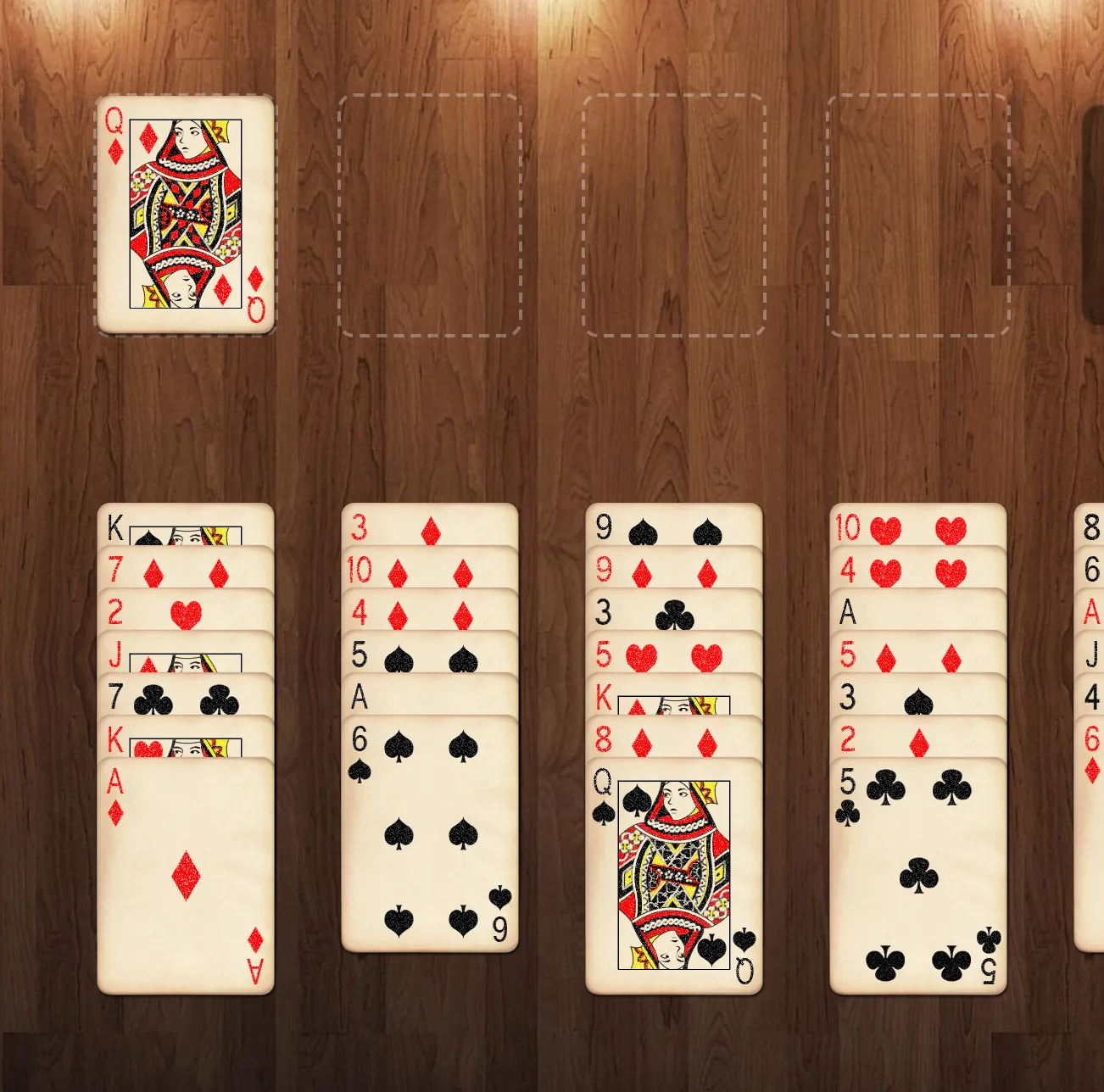 Into a free cell
One card per cell
- 1 Into a free cell
- 2 One card per cell
Step 4
Move several cards at once
A run of cards in alternating colours can be moved together, as long as there is room: every empty free cell and every empty column lets you move more cards. With 4 free cells you can move 5 cards at once.
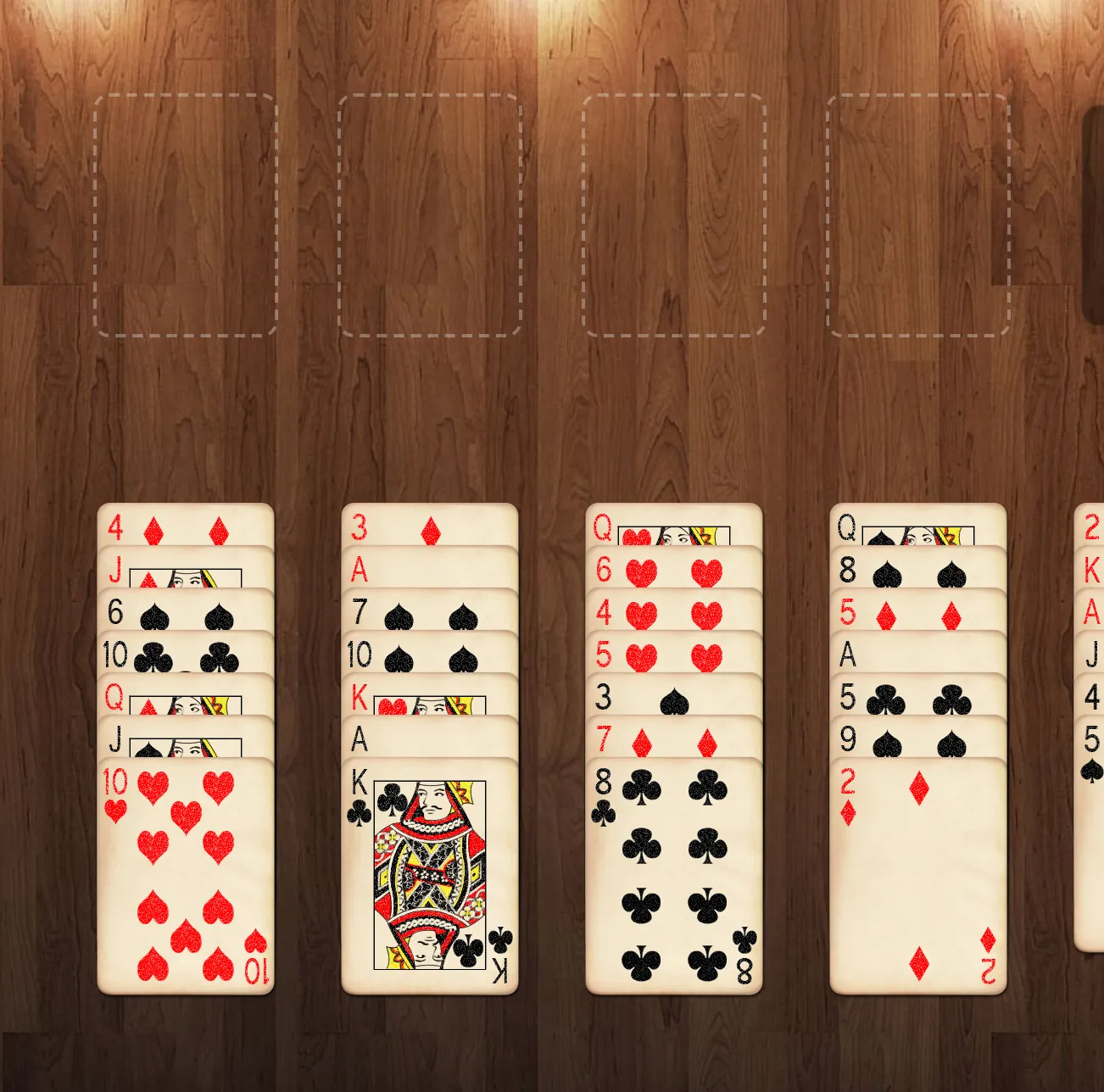 3 cards at once
Free room
- 1 3 cards at once
- 2 Free room
Step 5
Use an empty column
Any card, or a run that fits the free room, can go into an empty column. An empty column is worth even more than a free cell, so use it with care.
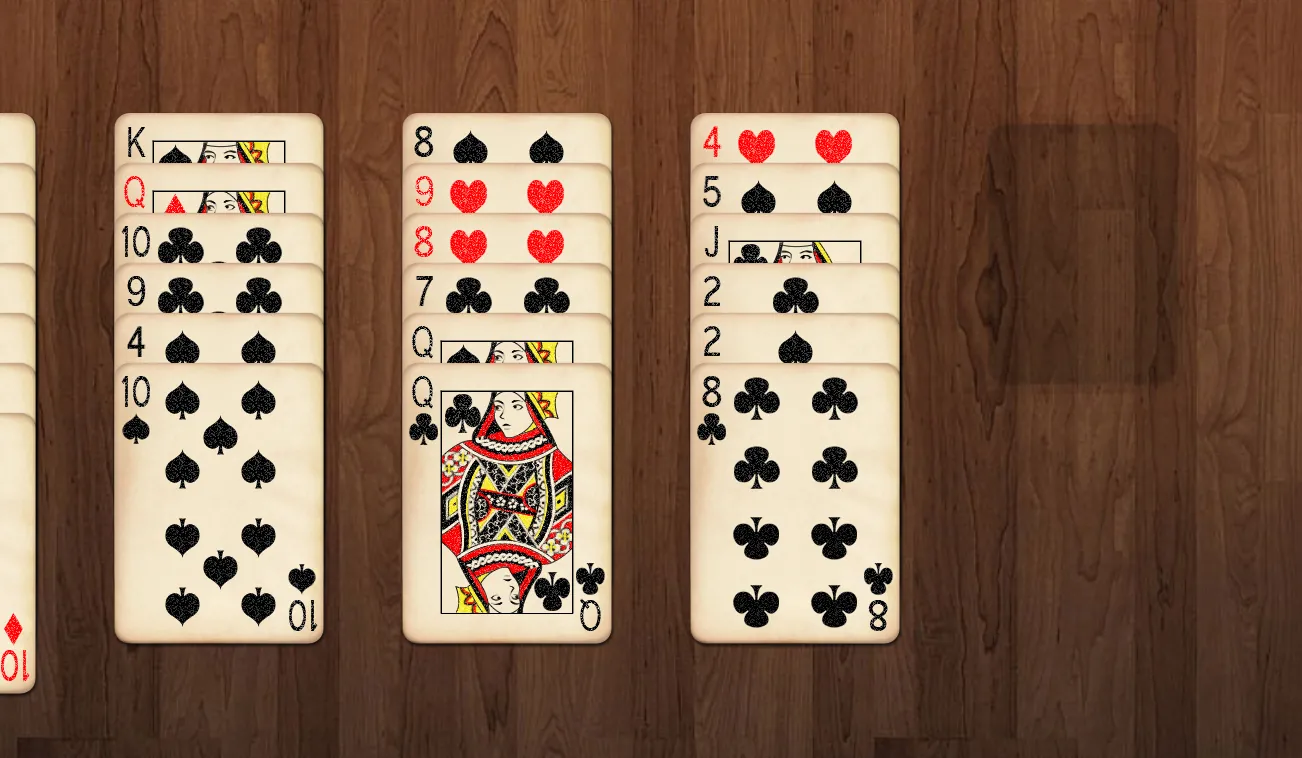 Empty column
Any card
- 1 Empty column
- 2 Any card
Step 6
Build the foundations
Start each foundation with an Ace and build up to the King in one suit. Drag a card there, or double-click it (on a phone, tap it). A double-click on a card that cannot go up puts it into a free cell.
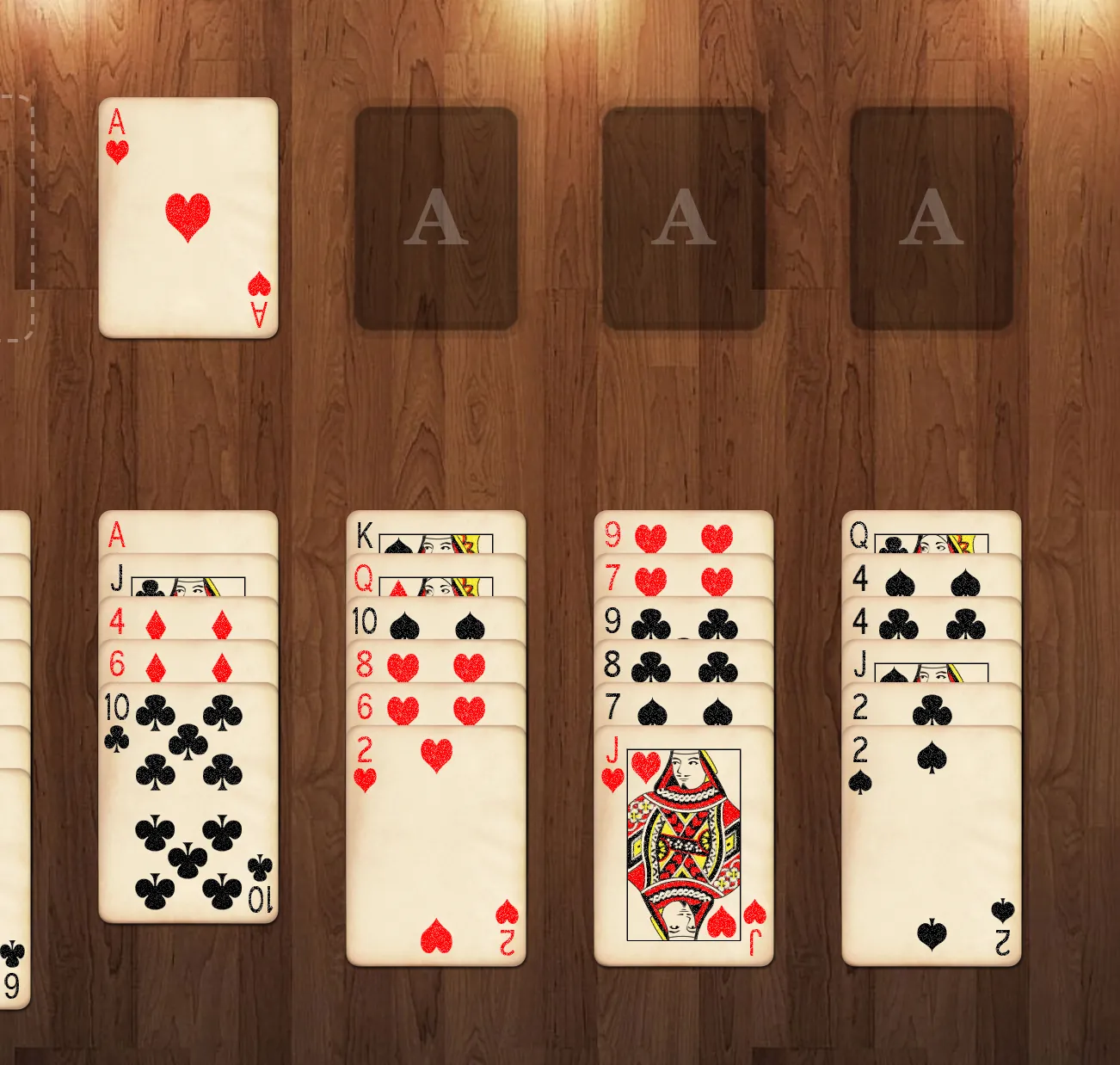 Start with an Ace
2 on the Ace
- 1 Start with an Ace
- 2 2 on the Ace
Step 7
Win the game
You win when all 52 cards are on the foundations. When every column is in order, the game puts the rest up by itself. Stuck? Undo a few moves and try another plan.
Why can almost every deal be won?
- All cards are face up from the start: nothing is hidden, so you can plan ahead.
- The free cells and empty columns let you take long runs apart and put them back together.
- Only very few deals cannot be won, so a lost deal usually means another plan would have worked.
Scoring
| Move | Points |
|---|---|
| Card from a column to a foundation | +10 |
| Card from a free cell to a foundation | +10 |
| Moving a card that lay on a card it does not fit on | +5 |
| Card into or out of a free cell | 0 |
With timed scoring (the default) you lose 2 points for every 10 seconds of play, and a quick win earns a time bonus. You can switch to standard scoring in the Options.
Tips
- Keep free cells empty as long as you can. Every full cell makes the runs you can move shorter.
- Free the Aces and 2s early: they are often deep in the columns.
- Try to empty a column. It helps more than a free cell.
- Stuck? Undo a few moves and try another plan, or play the same deal again with Retry game.